Shift workers don't have an insomnia problem. They have a mismatch problem, trying to sleep when their body, their household and the entire outside world are telling them it's daytime.
Normal sleep advice ("keep a consistent schedule," "get morning sunlight") often works against shift workers rather than for them. Here's what actually matters when your bedtime is 8am.
The Dusk & Sable Collection
Blackout sleep masks and blue light-free lamps — built for sleep on your own schedule, regardless of what time it is outside.
Shop Sleep Products →The Core Problem: Light Is Doing the Opposite of What You Need
Daylight is the single strongest signal your body uses to decide whether it's time to be awake. When you're trying to sleep during the day, even light leaking around curtains or through eyelids can be enough to suppress melatonin and keep your body in "daytime mode" which is why shift workers often describe daytime sleep as lighter, shorter and easier to wake from than a normal night's sleep, even after an exhausting shift.
This is the single biggest lever to fix, and it's also the most fixable.
What Helps Most
1. Full Blackout, Not Just "Dark Enough"
Blackout curtains help, but most don't fully block light around the edges of a window. A well-fitted, contoured sleep mask closes that gap completely and works regardless of what the rest of the house, or what the sun is doing.
2. A Consistent Wind-Down Cue, Even If It's Short
You won't always get a full evening routine before a 7am bedtime. But a short, repeated cue , same lamp, same order of steps, tells your body it's time to switch off, even if the sequence takes ten minutes instead of an hour.
3. Warm Light in the Hour Before You Sleep, Not Overhead Lights
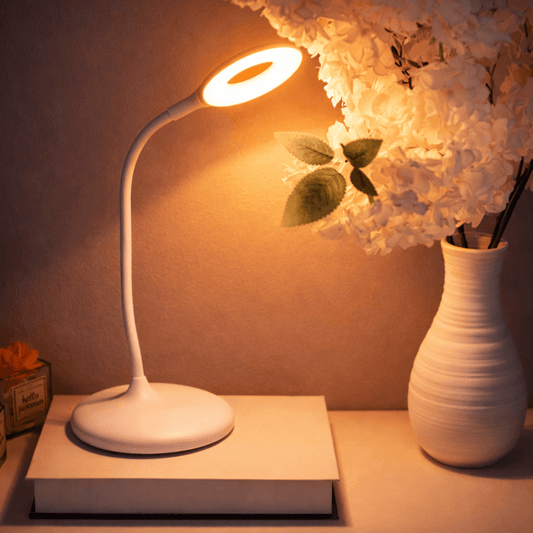
Coming home after a night shift and flicking on bright kitchen lighting resets your body clock in the wrong direction. Blue-light-free lamps let you see what you're doing without sending a "wake up" signal right before you try to sleep.
4. Protecting the Transition, Not Just the Sleep Itself
The hardest part of shift work sleep isn't staying asleep, it's falling asleep in the first place, while your body is still convinced it's daytime. A dark, cool, quiet environment during the actual falling-asleep window matters more here than for a normal night sleeper.
5. Magnesium as Part of the Wind-Down, Not a Substitute for It
Magnesium supports the nervous system's ability to relax, but it works best alongside not instead of the environmental changes above. Think of it as one part of the routine, not a fix on its own.
A Simple Shift-Worker Wind-Down Sequence
- Dim overhead lights the moment you get home, switch to a blue-light-free lamp instead.
- Do the same 2–3 things every time (shower, magnesium spray, mask on) regardless of what time it "should" be.
- Put the sleep mask on before you feel fully tired, it's easier to fall asleep in darkness than to fall asleep and then get up to fix the light.
- Keep the room as cool as you would at night, daytime heating from sunlight through windows can undo an otherwise good setup.
The Takeaway
Daytime sleep isn't a lesser version of night sleep that you have to accept, it responds to the same triggers as night sleep, as long as you control for the fact that the sun is working against you. Blackout at eye level and light control in the hour before bed do more heavy lifting than almost anything else.
Dusk & Sable's blackout sleep masks and blue-light-free lamps are built for exactly this — sleep on your own schedule, regardless of what time it is outside.
Shop the Range
Everything you need to sleep better — whatever time your shift ends.